QR codes for museums
Museums use QR codes to tell visitors more about an object than fits on the label, either as a short passage that appears without any internet or as a link to the audio guide track, the collection record or a curator's film. Codes at the entrance and café also join visitors to the gallery Wi-Fi and, on the way out, ask for a review. The audio, films and pages stay on your own website and channels, so the collections team keeps control of the content and the code is just the way in.
- Object storyStandard
- Audio stop 14Standard
- Gallery Wi-FiWith logo
Use cases
What to put in each code, and the generator that makes it.
- Text
Label text that works in the basement
Thick walls and lower-ground galleries often have no signal at all. A text code holds a short passage about the object and the phone shows it straight away, no internet needed. Keep it to a few sentences: more text makes a denser code that needs printing larger.
Text QR code generator - Website
Audio guide stops
Number each stop on the wall and give it a code that opens that track on your website or audio guide platform. Visitors use their own phone and headphones, and you avoid handing out and cleaning devices at the desk.
Website QR code generator - YouTube
Curator talks and conservation films
A code beside a restored painting or a fragile textile can open a short film on your YouTube channel showing the conservation work, or the curator explaining why the piece matters.
YouTube QR code generator - Wi-Fi
Wi-Fi at the front desk
If the audio guide or films need data, a Wi-Fi code at the ticket desk, on the floor plan and in the café gets visitors online before they head into the galleries.
Wi-Fi QR code generator - Spotify
The exhibition playlist
Many exhibitions now come with a playlist of music from the period or chosen by the artist. A code on the exit wall or the exhibition guide opens it in Spotify, so the show stays with visitors on the way home.
Spotify QR code generator - Google reviews
Reviews from the exit and the café
Visitors decide where to go on a day out from Google reviews. A code on the exit signage or café tables links to your review page while the visit is fresh, without asking anyone to search for you later.
Google reviews QR code generator
Print and placement tips
How to size, place and print your codes so they scan first time.
- 01
Match the code to the label, not the wall
Visitors read object labels from about 40 to 60cm, so a code of 3 to 4cm fits most label designs. Codes on a large introductory wall panel, read from a couple of metres away, need to be 15cm or more.
Guide: What size should a QR code be? - 02
Test at conservation light levels
Galleries showing works on paper or textiles are kept deliberately dim, and spotlights bounce off acrylic label holders. Print on matt stock, keep strong contrast, and check every code in the room itself with the lights set as they will be when the gallery opens.
Guide: How to make a QR code that always scans - 03
Link to the collection record, not the exhibition microsite
Temporary exhibition pages often disappear when the show closes. Link to permanent addresses, such as the object's page in your online collection, so labels that go back into storage or onto a touring show still work.
Guide: Static vs dynamic QR codes: which should you use? - 04
Keep offline text to a few sentences
Text codes are a good fit for no-signal galleries, but a 1000 character essay produces a code too dense to scan from a small label. Write around 150 to 300 characters, or split a longer story across two stops.
- 05
Tell visitors what they'll get and how long
A short line such as "Stop 14: listen, 2 minutes" or "Read more, no signal needed" helps people decide whether to get their phone out. Mention headphones on audio stops so the gallery stays quiet.
Which style to choose
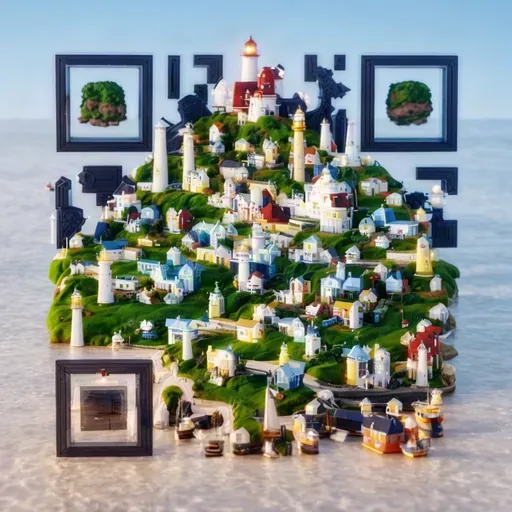
Standard codes in black or a single house colour sit quietly on object labels without competing with the work. A logo code (1 credit) suits entrance signage, the floor plan and the café, where your museum's mark shows the code is official. AI art codes (5 credits) belong on exhibition posters, banners outside the building and in the shop, where a code painted in the style of the show can be part of the design.
Common questions
Can a QR code work in galleries with no phone signal?
Yes, if it's a text code. The words are stored in the code itself, so the phone shows them without any internet. Link codes, audio and video still need signal or your Wi-Fi.
Can Scandalous host our audio guide or videos?
No. Scandalous makes codes but doesn't host files. Put audio and video on your website, audio guide platform or YouTube, then link the code to each track or film.
Can we find out which objects get scanned most?
Yes, for link codes. Each one's page in Scandalous shows its scans, so you can compare stops. Text codes can't be measured at all, because nothing is loaded from the internet.
What happens to the codes when an exhibition closes?
They keep opening the exhibition pages unless you change them. Edit each code's destination to the collection record or a current page, or redirect the old pages on your own site.
Do QR codes leave out visitors without smartphones?
They can, so treat them as extra rather than essential. Keep the key information on the label itself and offer large-print guides or audio devices at the desk for visitors who need them.
your first code is free.
sign up with your email and start making codes. add a logo or ai art whenever you need it.
get in, it's free